
Kelltech Field Notes
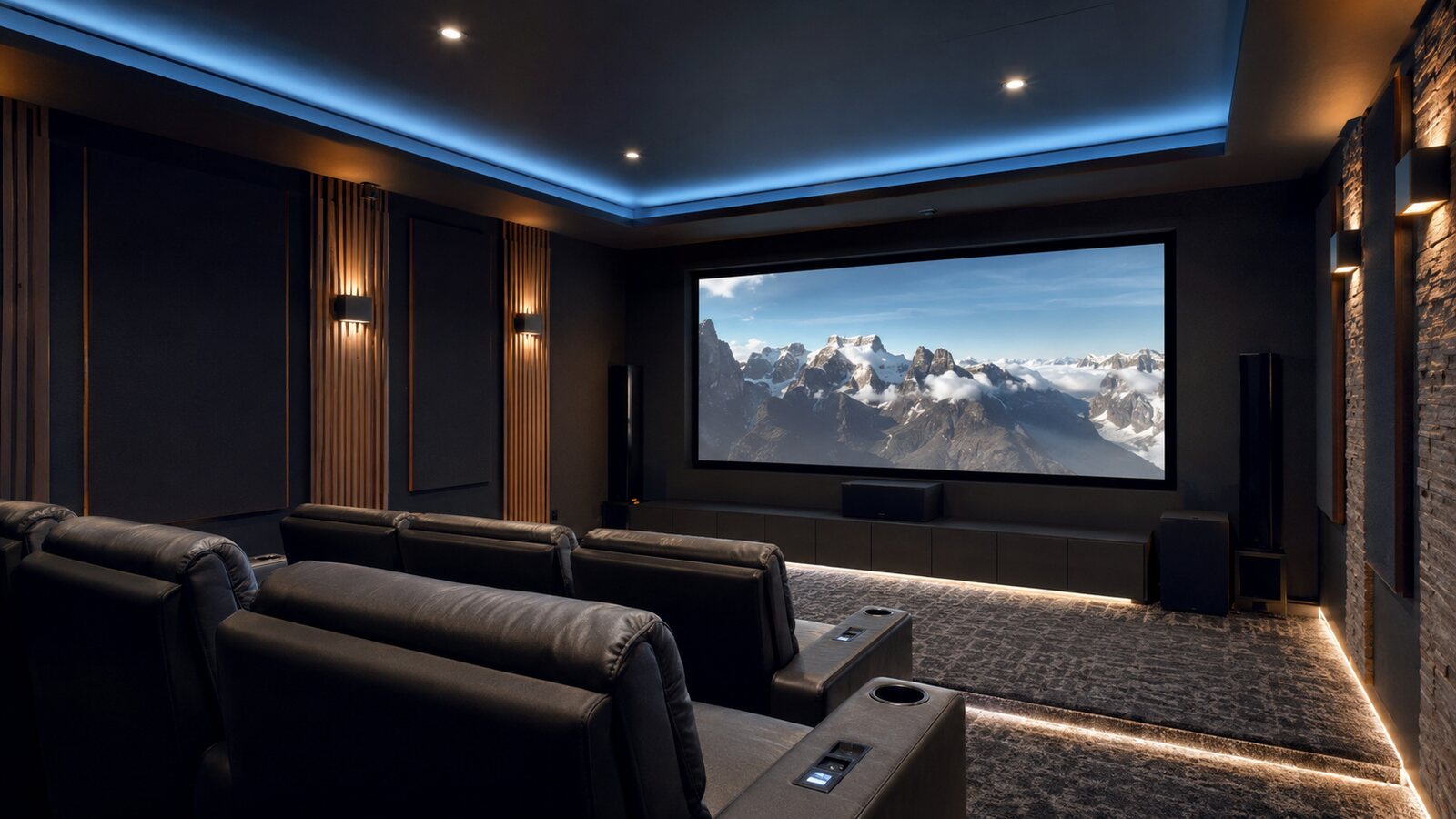
A great theater balances image size, speaker geometry, acoustic treatment, seating, lighting, and simple operation.
- The experience or risk this technology addresses
- Design decisions that affect reliability
- Questions to ask before installation
Start with the outcome
Premium equipment cannot compensate for a room that was never planned as a complete experience. Before choosing products, define the people, spaces, schedules, risks, and response expectations the system needs to support. That prevents a feature list from taking the place of a working design.
Design the complete system
A great theater balances image size, speaker geometry, acoustic treatment, seating, lighting, and simple operation. The result depends on more than the visible device. Cabling, wireless coverage, power, network capacity, mounting locations, software permissions, cybersecurity, and documentation all affect performance. A professional design connects those details to the way the property actually operates.
For commercial properties, that means accounting for employees, visitors, vendors, after-hours activity, incident review, and the people responsible for response. In a home, it means making the system understandable for family members and guests while keeping everyday control simple.
Make alerts actionable
Notifications should identify what happened, where it occurred, and what action is appropriate. Too many low-value alerts train users to ignore the system. Event categories, schedules, verification, and escalation rules should be tuned during commissioning and revisited after real-world use.
Plan for ownership after installation
Ask how users are added and removed, how software and firmware are maintained, what happens during an internet or power interruption, how recordings or event histories are retained, and who provides support. Good handoff documentation is part of the system—not an optional extra.
Questions to discuss with an integrator
- What specific event or daily routine should this solve?
- Which components must continue working during an outage?
- Who receives alerts, and what should happen next?
- How will the system be tested and documented?
- What expansion or service needs should be anticipated?
Bring the systems together
Kelltech Systems designs commercial security, fire, monitoring, networking, audiovisual, and residential automation solutions across Dallas–Fort Worth. A coordinated plan can reduce duplicated equipment, confusing controls, and gaps between trades.